

1911 advertisement for Luzianne coffee and tea
And it’s due to the efforts of an 18th century French botanist and a Louisiana entrepreneur who built a beverage empire in the first half of the 20th century that ice tea is the common language of southerners across the United States.
When Andre Michaux, at the behest of King Louis XVI, arrived on the shores of South Carolina in September of 1786 he was set to make a centuries-long impact on the drinking habits of Americans and southerners in particular.
The French plant expert was on a mission. He had been commissioned in his home country to visit the young United States to secure new strains of trees for development in the war-depleted forests of France.
But his passionate interest in gardening and farming would lead him to found a 111 acre working plot of land at Goose Creek near Charleston.
Andre Michaux brought many plants to the US that had previously been unknown to our country. Crape myrtles and camellias which are now common and widely spread across North America were then new and exotic. The flower-loving gentry of South Carolina were elated that Michaux had set up camp in their midst
But it was one particular flora that Michaux brought from Europe, the tea plant, that would spell the beginning of what is now a multi-billion dollar a year industry spread across the whole of the US territories.
Specifically, iced tea.
It’s 1839, and native Kentuckian Mrs. Lettice Bryan has just penned her masterful tome, The Kentucky Housewife. This would’ve been the era when “the hospitality and cuisine of the South reached its apex,” as historian John Egerton so poignantly put it.
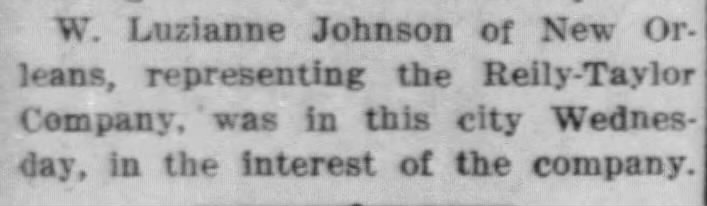
In 1914 W. Luzianne Johnson was an employee of the Reily-Taylor Company
But there’s a catch; the formula calls for a bottle of claret or champagne. A delicious adjunct to be sure and one that is always most welcome in the South but it’s not the ice tea that we think of when we visit the market to purchase our weekly box of Luzianne.
The US government, in 1858, seized upon the idea of tea as a potential domestic crop of great impact. They sent infamous Scottish spy Robert Fortune to China to obtain seeds for planting in this country. Less than a year after his return stateside tea plants had been distributed to individual gardeners and farmers across the South and Gulf states with good success noted amongst the recipients.
Homegrown tea was now being drunk on these shores.
The new prevalence of ice for cold drinks, once a precious commodity, was abetted by the founding of the Louisiana Ice Company in 1868. It was said to be the first commercial commercial ice-making company in the US, and quickly set about vending 50 tons of ice per day to thirsty New Orleanians.
By 1874, McKenna’s restaurant in downtown New Orleans was running advertisements trumpeting ice tea, mead and ham sandwiches. The insurgent beverage was just beginning to establish a foothold.
Marion Cabell Tyree published her Housekeeping In Old Virginia in 1879 and for the first time we see a recipe in print for a bonafide ice tea of the sort found in thousands of households across Louisiana today.
More interesting developments came along one year later when Commissioner of Agriculture, William G. Le Duc, hired John J. Jackson – a man who’d been on the ground growing tea in India for 14 years – to further test the ability of American soil to grow tea plants. Liberty County, Georgia was the site of the nascent tea farm.
To this day Georgia is one of the leading consumers of ice tea in the Americas.
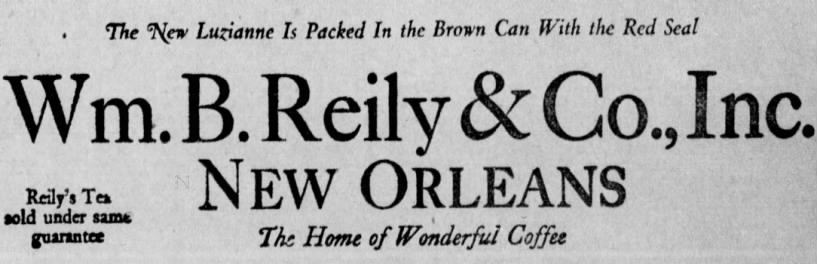
Luzianne Tea sly mentioned in Reily advertisement. 1921.
By 1893 iced tea was so popular that it made an appearance at the Chicago World’s Fair where N.B Reed, a vendor, grossed over $2,000 selling glasses of the exotic beverage. Importers of the day were spending $16 million annually to bring in 100 million pounds of the precious leaves
Merchants in New Orleans, a city boasting one of the largest ports on earth, seized onto tea as a business, and advertisements of the day saw boxes of Oolong and Souchong being offered to entrepreneurial tradesmen.
Ice tea was now commonly served in New Orleans restaurants and cafes as is reflected in print ads as the 19th century drew to a close. A cold glass of the stuff could routinely be had for a nickel and was often offered on draft.
In 1896 we see, for the first time, the use of the phrase “specially blended for iced tea,” by the US Tea Co. in Baltimore, Maryland. Oddly, the phrase is used to promote their sugars and not their teas.
Three years later, and on the other side of the country, a grocer in Sacramento uses the same phrase to promote his ‘Chakama Tea.’ As near as I can tell this is the first time the slogan is used to sell an iced tea brand. Today the usage is an industry standard and routinely associated with the Luzianne brand.
While the import and sale of tea was making progress it was coffee that was the heavyweight of beverage sales in Louisiana. A major player emerged in New Orleans’in 1903 in William B. Reily, founder of the Reily-Taylor Company whose Luzianne coffee brand had grown its annual revenue to over a million dollars a year by 1909.
The concern was moving a staggering six million pounds of coffee per annum.
Reily was raised in Morehouse Parish where he began his employment as an apprentice at a general store in Bastrop. After eight years of learning the trade he opened his own shop before moving to Monroe and organizing the Southern Grocer Company, a concern he ran for 14 years.
But the big city lights of New Orleans beckoned in 1903 and Reily threw his family’s fortune into a life-changing move to southeast Louisiana where he grew and developed the Luzianne Coffee brand.
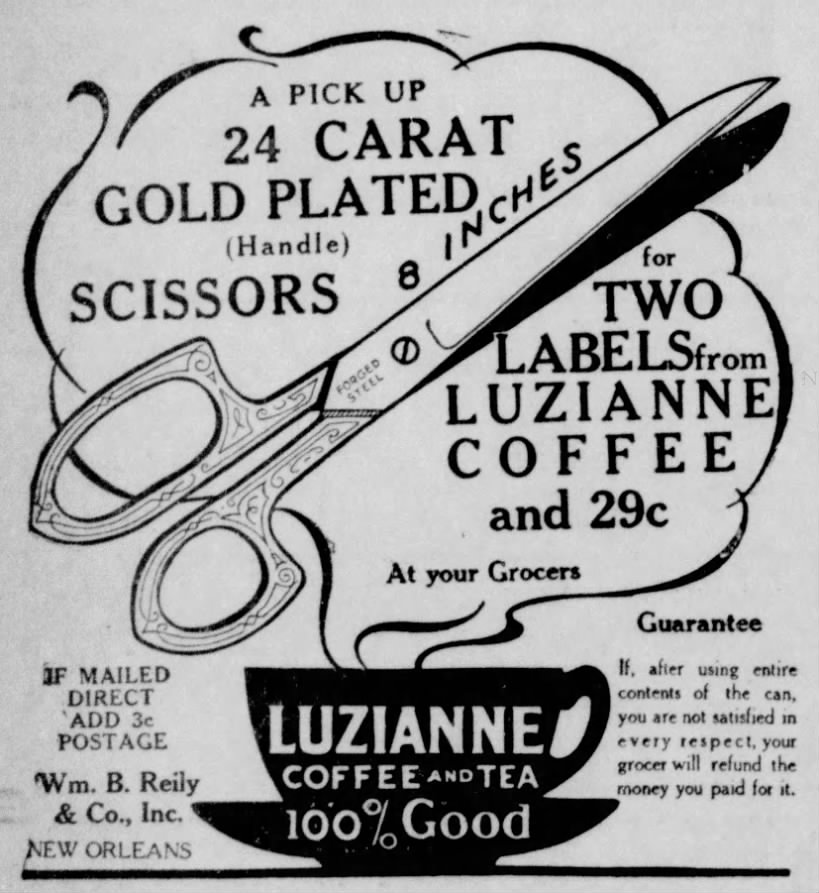
1933 advertisement for Luzianne Tea
The Votan Coffee and Tea brand is interesting in that 1910 is the only year we see the Reily-Taylor Company promoting the line (other than a singular ad in Kansas in 1921 for a closeout sale.)
Instead, in July 1911, William B. Reily turns his attention to a fresh offshoot of his empire with Luzianne Tea first being mentioned in advertisements trumpeting his old stalwart Luzianne Coffee.
Americans consumed 100,000,000 pounds of tea that year and a small domestic crop in Summerville, South Carolina slowly began to show promise. In those early days of American tea production $5 would get you 100lbs of tea seeds if you had the fever to start growing the plants on your own.
In July of 1911 the New Orleans Times-Democrat reported that local stock of tea was nearly depleted amid the US governments enforcement of the Tea Importation Act and its concurrent ban of the import of artificially-colored tea(s).
The establishment of the Bates-Chesbrough steamship line from San Francisco to New Orleans held much promise for New Orleans tea merchants of that era and William B. Reily would’ve likely been seen rubbing his hands together in anticipation.
The New Orleans Board of Trade arranged to throw a raucous party to celebrate the arrival of the first ship which was filled with goods and sundries for local merchants.
In that long-ago time Uncle Sam got ten cents a pound on imported teas brought in from overseas.
Meanwhile, Russia engaged in a war of words with China over China’s exertion of a monopoly over the tea trade in Mongolia. Russia wanted to carve out a bit of the market for themselves as tea was still used as currency in Mongolia.
Reily picked a fine time to launch an ice tea brand.
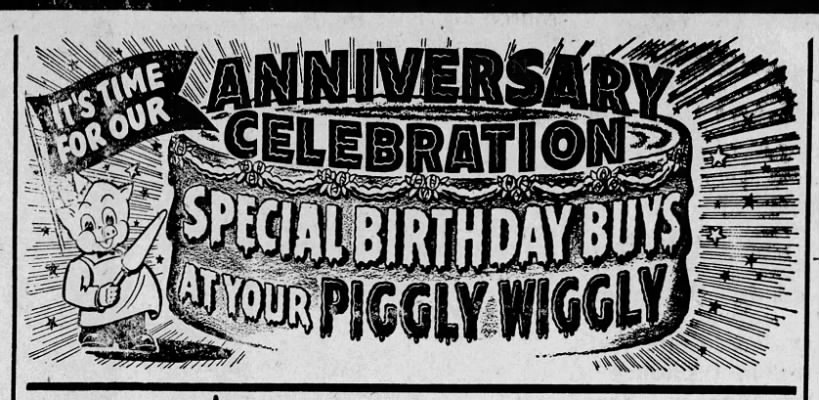
Piggly Wiggly sold plenty Luzianne tea in the 1950s
The Herald newspaper of New Orleans featured the Reily-Taylor Company in winter 1912 as it reported the business had hired a firm to promote their goods by installing a large, “electric sign” up the Mississippi River in Memphis, Tennessee.
In January of 1914, a gentleman in the employ of Reily-Taylor, W. Luzianne Johnson, was reported to be visiting the Louisiana town of Crowley to attend to the affairs of his employer. This adds to the mystery of the ‘Luzianne’ brand name origin. Interestingly, the first documented print ad featuring Luzianne appeared in March of 1903 in the same small town newspaper.
When I inquired, etymology experts at the Library of Congress agreed with my theory that ‘Luzianne’ is merely a regional derivation of the state name, Louisiana. But Mr Johnson’s presence in the company adds a bit of mystery to the lore of the business.
In 1917 the Reily-Taylor Co. really turned up the marketing heat with a sprawling ad campaign encompassing eight states across the south and stretching northward to Pennsylvania. Nearly a thousand ads were pushing the company brand to consumers but their tea imprint is puzzlingly left out in favor of their dominant coffee brand.
On June 5th, 1919, the Reily-Taylor Company officially changed their name to Wm. B. Reily & Co. Inc.
Reily’s advertising strategy changes a bit in the 1920s and 1930s as you see tea being slyly mentioned in the fine print of the big blowout Luzianne Coffee newspaper ads of the day. Grocers in North Carolina were especially savvy and extolled the flavor virtues of “Reily’s tea” when paired with biscuits.
Luzianne begins to be offered in the new convenience of tea bags in the early fifties when marketers at Reily paired free packets of the bags with the purchase of one pound cans of their mothership coffee. It was not uncommon for the retail merchants of the era to throw in a free glass goblet in to sweeten the deal.
History tells us that the lady shoppers of the day would sometimes drive clear across town for a fancy, free glass to drink her tea from, especially if the market gave her a boost in her S&H Green Stamp collection.
In 1954 we first see the new product, iced tea concentrate, made commercially available.
By the late 50s, Luzianne had begun to make forays into the “instant tea” market as harried consumers were hurtled into modernity.
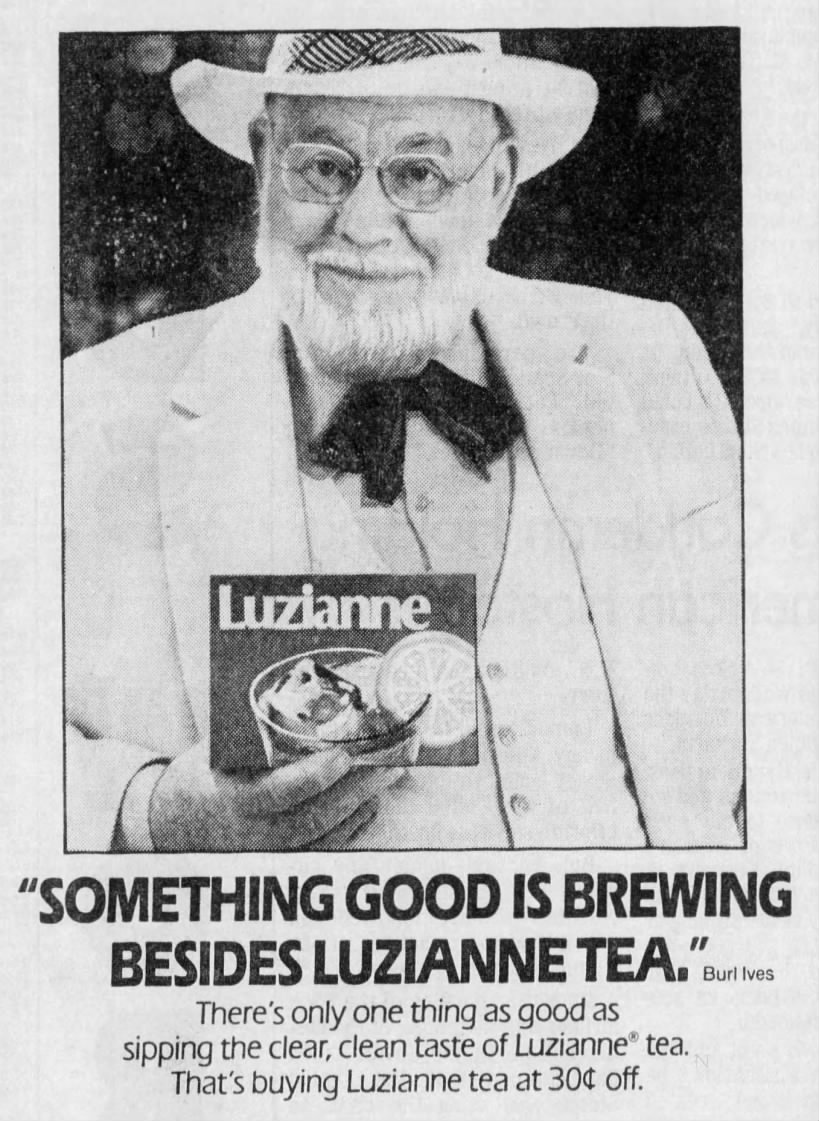
The immortal Burl Ives enjoyed Luzianne tea
That same year Reily went all in on TV advertising on the Georgia-Florida border with a huge ad buy on Jacksonville’s WFGA-TV. Soon enough the airwaves were saturated with Luzianne tea ads
In 1963, Luzianne’s archrival, the Thomas J. Lipton company, invested in a tea development farm and research station on Wadmalaw Island in South Carolina. They rounded up some of the plants from Charles U. Shepard’s Pinehurst tea farm that had been left to grow wild and incorporated them into their plantation.
The story of a brand can often best be told by its advertising footprint over the years, and it is not until the mid to late 60s when Luzianne Tea finally puts some muscle into its ad budget. Suddenly hundreds of ads begin appearing across the Gulf South, up into the Mid-Atlantic states and even a few in the midwest.
Unsurprisingly tea consumption in the US vaulted from a little over six gallons per person in 1962 to seven-plus gallons a decade later.
1977 was a big year for the Luzianne Tea brand as Reily revamped and modernized the packaging as well as adding a seventh flavor to the tea’s product line. Luzianne could then be purchased in three bag sizes, and 18 different packaging units secured space on grocery shelves.
Academy Award winner and 33rd Degree Freemason Burl Ives was brought on to further bolster Luzianne sales. Ives had built a lifetime of cache in the Deep South with his role as the cotton tycoon Big Daddy in the film Cat On A Hot Tin Roof, a part he took on with aplomb as his character was tossed on a storm of greed, deceit and torment.
To this day when Ives’ name comes up in the South the two things he is most famous for are his role in the movie and as Luzianne’s iced tea spokesman.
In April of 1982 Luzianne rolled out a brand new product across the US: half-gallon tea bags. Solar tea was just starting to take off in the south and if you were a kid riding his bicycle down rural dirt roads it seemed like every front porch had a big, repurposed, gallon pickle jar of Luzianne tea bathing in the hot sun.
The makers of Kool-Aid could not have been happy.
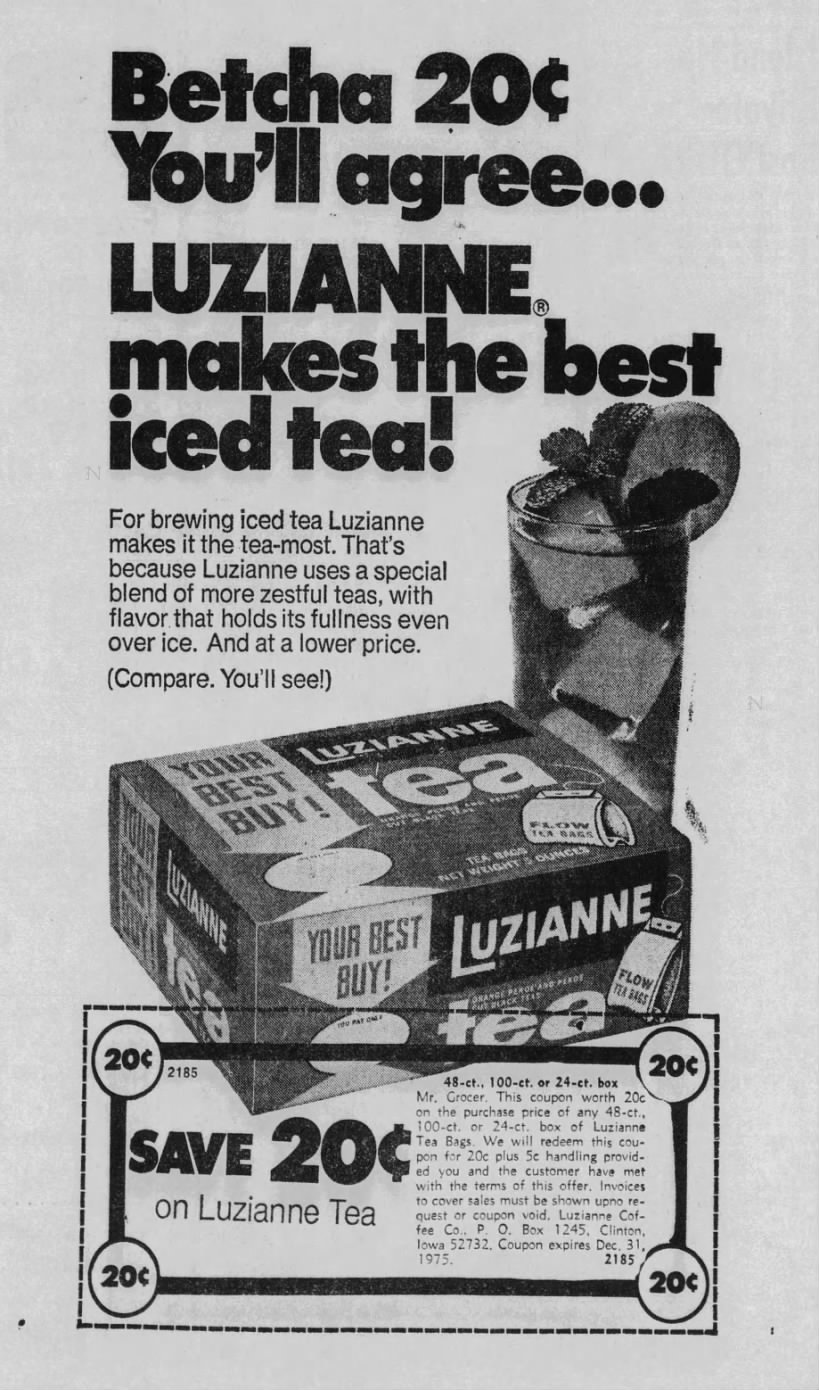
Lafayette Louisiana Advertiser. 1975.
Luzianne would trademark “the right tea for iced tea is now in the can,” in 1988. In his book Strategic Management: Concepts and Cases, Peter L. Wright stated that “Barq’s began selling canned Luzianne iced tea under a licensing agreement with Luzianne Blue Plate Foods in November 1990.”
By the early 90s, tea consumption was still hovering at the seven gallons per US resident per year mark and that created alarm in the tea industry. It was time to promote bottled tea, cold and ready to drink, from quick marts and curb store coolers across the US.
Luzianne sweetened the deal by offering their ready to drink tea in five different flavors including, in a nod to Louisiana’s vast citrus industry, orange. A one pint bottle cost well under a dollar. Regional food writers at daily newspapers immediately picked up on the product and began penning columns on this new bit of exotica.
Those of a certain age may recall that this was the era of Snapple and Arizona Iced Tea, two insurgent brands that fought like tigers for cooler space, and had clever advertising strategies to lure consumers to their products. Mega-heavyweight Quaker Oats would soon swoop in and purchase Snapple for $1.7 billion.
Americans consumed 200 million pounds of tea in 1995, and 80 percent was iced. No one on the planet, then or now, drinks iced tea with as much fervor as residents of the US.
Superheavyweights Pepsi and Coca Cola waded into the fray in 1996. Pepsi banded with Lipton in a reported 75 year contract to promote iced tea and related products. Meanwhile, Coke began heavily marketing Fruitopia, whilst anticipating a projected $400 million windfall. Executives must have sold their beach homes when sales for the year tallied only $60 million.
Luzianne never blinked. They knew this too would pass. A year later the company was second only to behemoth Lipton in their home turf of the southeast US.
Triarc Beverage would buy Snapple in 1997 for $300 million only to flip it to Cadbury Schweppes just three years later for about a billion dollars.
By 2003 the US bottled tea market had increaded 10-fold over what the Americans drank in 1990. The following year Luzianne introduced a line of adjunct tea flavorings that came in raspberry, peach or mango as the US imported 219 million pounds of dried tea.
In 2005 newspapers across the US began running full-color adverts for Luzianne tea.
Showing no signs of slowing down or letting up, tea trade journals reported that the US imported $15.7 billion worth of tea in 2013.
In 2014 Luzianne introduced new-fangled iced tea K cups. It is unknown if all the noncs and tantes down the bayou rushed to the nearest Walmart to lay in a supply.
We’ll just keep on using our weathered old Cajun Chef pickle jar to make our Luzianne ice tea here in New Orleans 9th Ward.
A few years ago the famous newsman Charles Kuralt stood on top of Grandfather Mountain in rural North Carolina bragging on Andre Michaux saying “…we should all remember his name for he was one of the most remarkable human beings of the 18th century, or of any century.”
Kuralt was not wrong. A properly made glass of iced tea is transcendent, and it doesn’t matter if you’re drinking it from a Yosemite Sam glass that your grandma got in a Hardee’s giveaway or from a fine crystal goblet at a mansion on New Orleans’ St Charles Avenue.
Either way, somewhere Andre Michaux is smiling
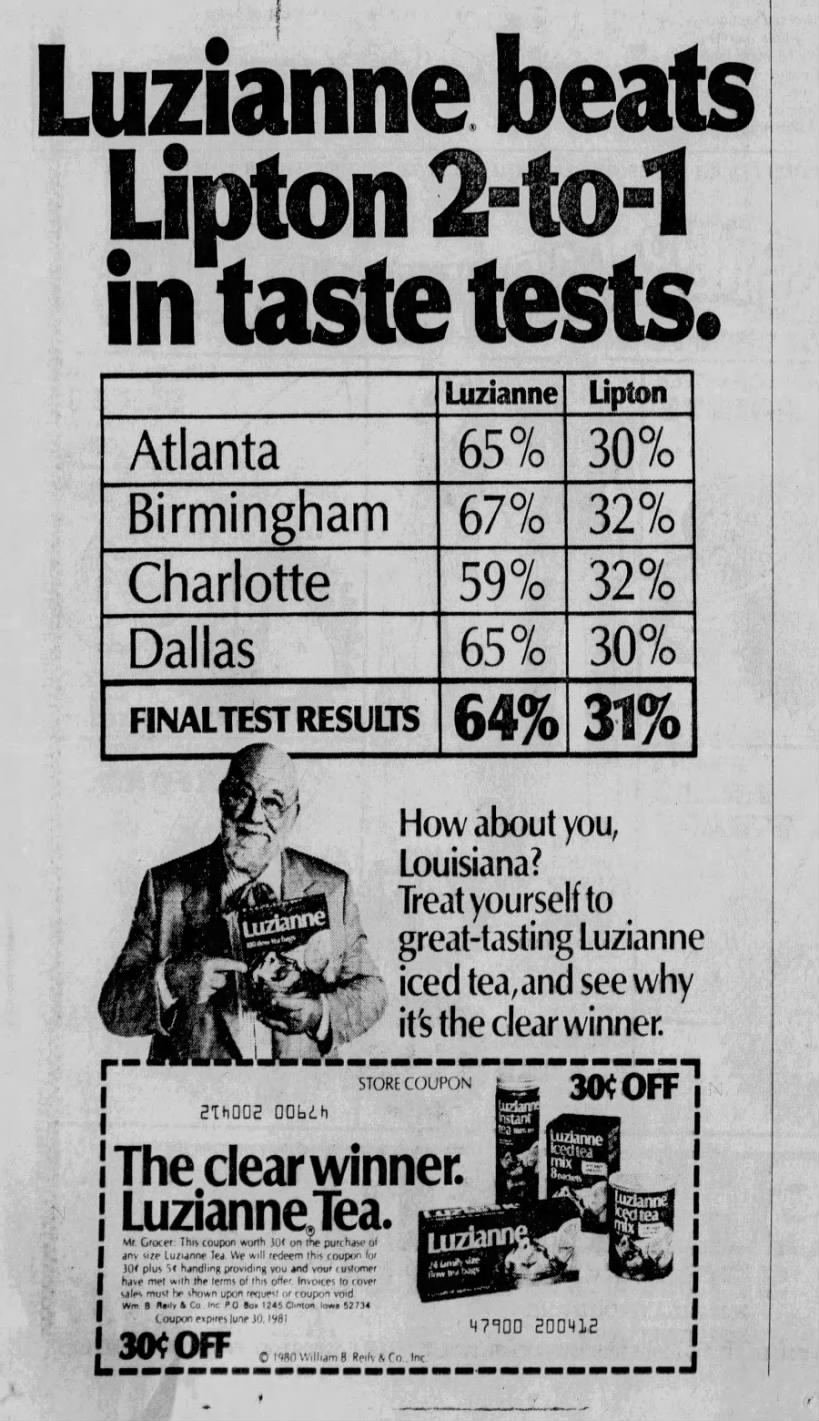
Shreveport Journal. 1980 Luzianne tea advertisement
Journeys Through Paradise, Pioneering Naturalists in the Southeast by Gail Fishman
Queensland Agricultural Journal Bulletin: US Dept Of Plant Agriculture – Bureau of Plant Industry by Charles U Shepard
Queensland Agricultural Journal Volume 20. 1908
Strategic Brand Management: Building, Measuring…by Kevin Lane Keller
Advertising Techniques – Volume 12. by The University of Michigan
The Tea and Coffee Trade Journal – Volumes 112-113. 1957
Trade Agreements Extension Hearings Before the Committee on Ways and Means, House of Representatives, Eighty-fourth Congress. 1955
All about Tea – Volume 2 by William Harrison Ukers. 1935
Coffee and Tea Industries and the Flavor Field – Volume 42. 1919
The Tea & Coffee Trade Journal – Volumes 36-37. 1919
The Marketing of Tea by K. K. Roy. 1961
The Handbook of Advertising by Edward Benjamin Weiss. 1938
Strategic Management: Concepts and Cases by Peter L. Wright
Tea: A Global History by Helen Saberi
History of New Orleans by John Kendall Smith. 1922
Beverage Industry Annual Manual. 1979
The Tea & Coffee Trade Journal – Volume 114. 1958
Media Decisions – Volume 11, Part 1. 1976
Ice and Refrigeration – Volume 123, Issue 6. 1952
Advertising & Selling – Volume 35, Issues 7-12. 1942
Tall Trees and Far Horizons, Adventures and Discoveries of Early Botanists in America. Virginia Eifert
André and François André Michaux by Henry Savage Jr. and Elizabeth J. Savage