
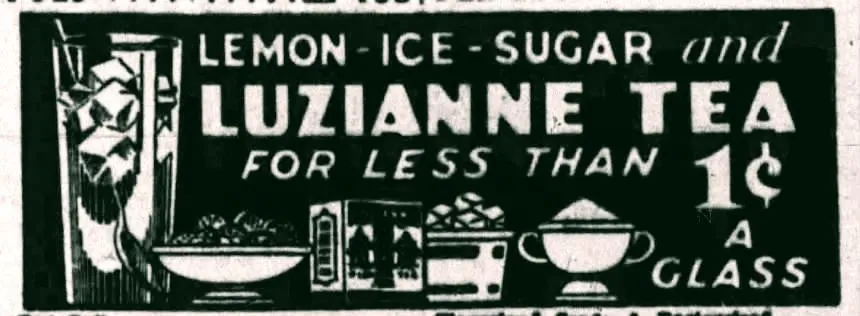
The Times-Picayune (New Orleans) 1941
On April 2, 1942, the War Production Board, helmed by Donald Nelson, a former executive from Sears – Roebuck, issued a formal order mandating a drastic reduction in the use of tin for civilian packaging.
Grocery store packaging made from tin faced a day of reckoning.
During the war, folks were famously urged to save their foil. You’d see ads and articles from 1943–1944 telling families to peel the silvery wrappers off gum or cigarette packs and hand them over to local scrap drives. If you had a rural grandma who came up in that era, you probably remember a kitchen drawer stuffed with well-used, carefully cleaned and folded aluminum foil she’d been hoarding for years.
By 1944, many manufacturers had perfected the composite canister. These were heavy-duty, multi-ply paperboard tubes, often lined with parchment to mimic the moisture-sealing qualities of the original tin.
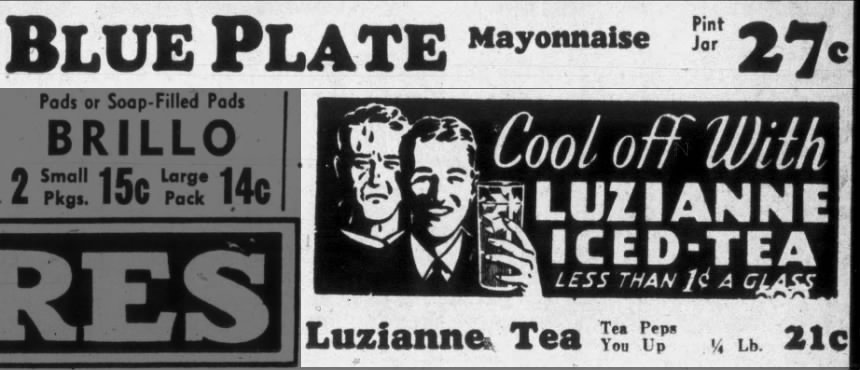
New Orleans States-Item (New Orleans) 1941
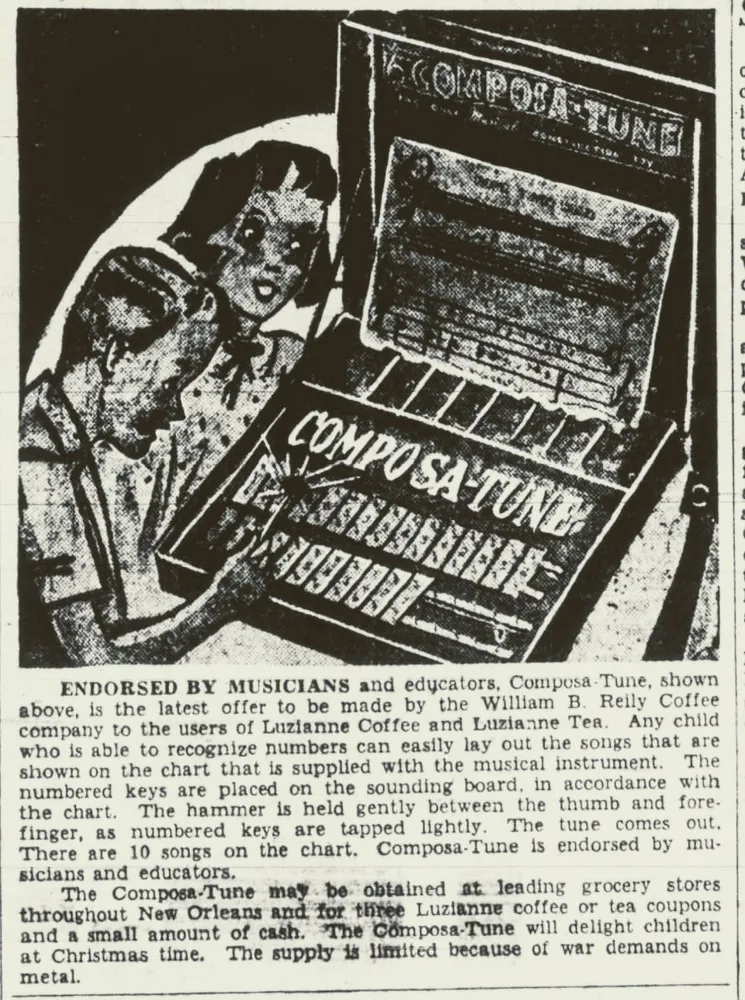
Wartime Rationing began to affect Luzianne giveaways. New Orleans States Item. 1941
Look at the closing line in the above ad: “The supply is limited because of war demands on metal.” This is a masterclass in psychology. By explicitly mentioning “war demands on metal,” they are paving the way for the consumers of the day to begin to understand why the tin packaging is soon to go away.
By summer ’44 the Luzianne ad copy had completely changed to euphemisms of canister, package or just the weight of what you may have purchased.
That same year, wartime consumer protection agencies like the Office of Price Administration were cracking down on deceptive advertising. OPA had thousands of local volunteer boards (mostly women, since men were off fighting) that adjudicated disputes and caught violators. It also empowered consumers to sue price-gougers directly
Calling a product “tin” when it was actually paper and fiberboard was starting to look like a misrepresentation of goods. Switching to the neutral, legally safe “pkg.” let the company dodge false-advertising risk while keeping their copy short and punchy.

First mention of Luzianne Tea box. Anniston Star, July 1943
The war effort had successfully commoditized the packaging. The container was no longer a selling point; the weight and price were the only things a wartime shopper, dealing with point rationing and supply fluctuations, actually cared about.
The Office of Price Administration (OPA) placed extreme emphasis on clear labeling of weight to prevent “hidden price increases” (where companies would shrink the amount of product while keeping the price the same). Advertising the weight prominently was the safest way for a company to stay off the OPA’s radar.
I look at this as a sort of linguistic de-escalation if you will. Reily Foods, Luzianne’s parent, did not need the feds breathing down the neck of the company over using tin, now forbidden, in its packaging but it also did not want to lose their loyal customer base over ‘cheapening’ the product by placing it in paper/cardboard.
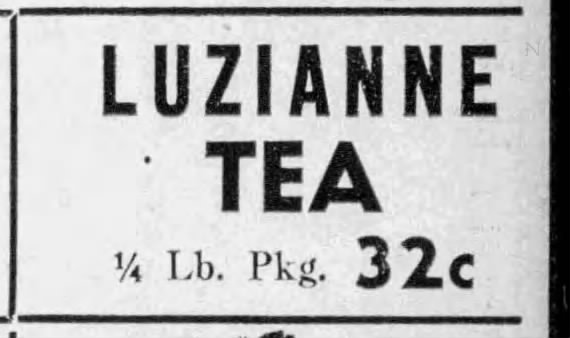
Luzianne Tea. First use of word pkg. Tampa Times. July 1944
Newspapers were king back then and the savvy housewives were pinching every penny they could. As they scanned the daily for specials they homed in on pricing. That’s what led them to the market. And after arriving at the corner grocery to purchase their family provisions they were suddenly met with super attractive giveways. Goblet, pitchers, knives etc. .
By late 1944, Reily Foods was likely dealing with significant consumer fatigue. People were tired of ration books, tired of “substitute” packaging, and tired of the decline in perceived quality. Giving away glassware—a common promotion in New Orleans and across the South—served three strategic purposes:
When a customer holds a flimsy paperboard “pkg.” in one hand and a sturdy, high-quality glass in the other, their brain anchors the value of the transaction to the glass. It effectively masks the “cheapness” of the new container. You aren’t just buying tea in a box; you are acquiring a piece of glassware or a sturdy knife
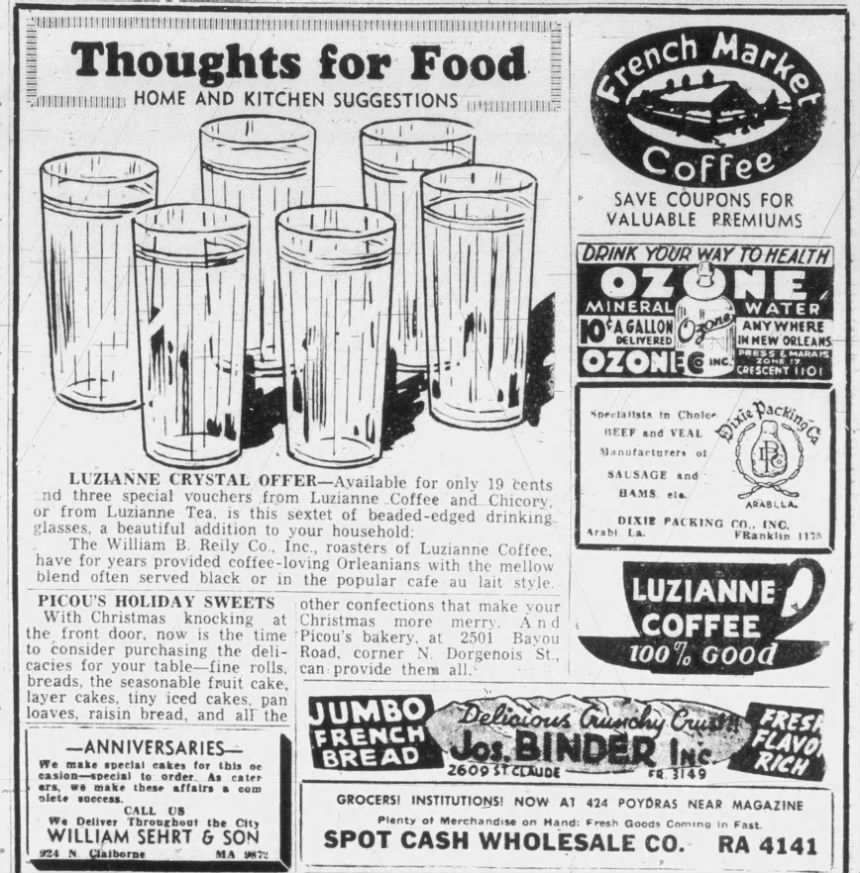
Luzianne Tea giveaway. New Orleans States-Item. December 1944
Even though they were forced to use inferior packaging, Reily couldn’t afford to let Luzianne be perceived as a budget brand. By bundling the tea with glassware, they maintained their status as a premium product that gave the shopper a little extra luxury during a time of extreme austerity. It kept the brand feeling generous and “pro-consumer” while everyone else was struggling just to keep product on the shelves.
You don’t clamber out of small-town Louisiana and build a series of powerhouse grocery brands without being a savvy operator.
It is worth noting that while metal and paper were heavily restricted, the glass industry had a different set of supply dynamics. Many companies shifted to glass jars to package goods that were previously in tin. If Reily was promoting glassware, they were capitalizing on a material that was slightly more available—or at least more marketable—than the despised “wartime fiber” boxes.
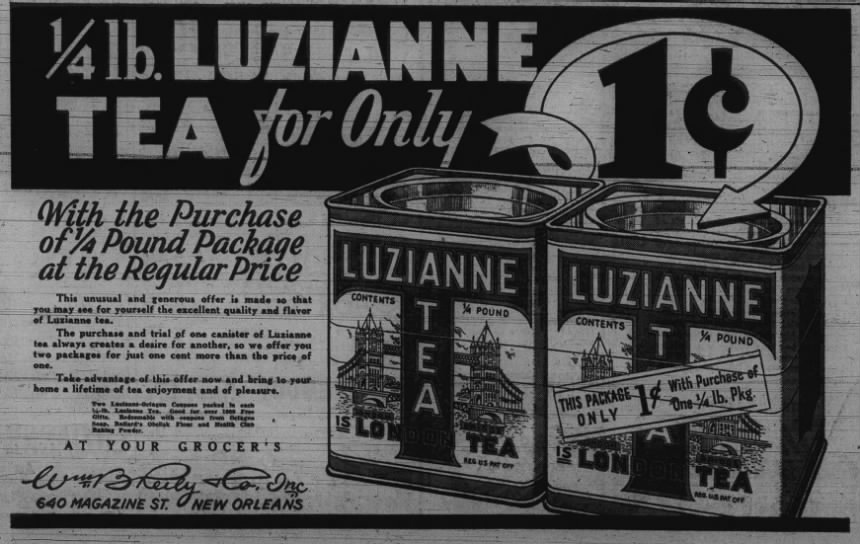
Luzianne Tea tins, soon to be collectible. Times-Picayune. 1940
Before 1942, a tea tin wasn’t just a container—it was a fixture in the kitchen. People kept them, reused them, displayed them. By 1944, once “pkg.” had fully taken over, the industry had quietly retrained the public to see the container as trash the moment the product was gone. That shift—from durable storage to disposable wrapper—is arguably where the modern convenience economy was born.
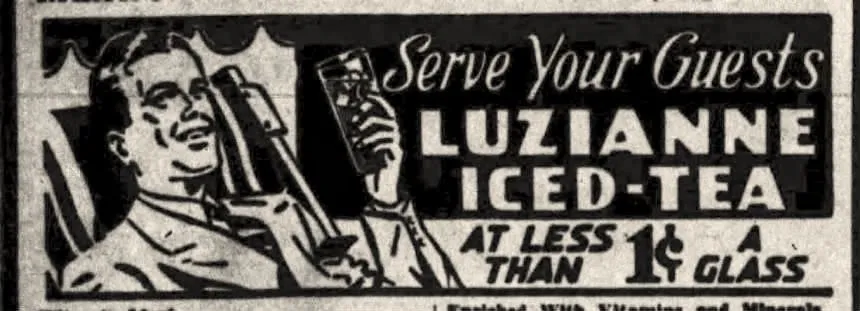
Luzianne Tea advertisement. Times-Picayune. July 1941
Reily Foods was the perfect testing ground. They didn’t just survive the war—they perfected the “low-cost/high-marketing” playbook. By pouring their ad spend into lifestyle (the glasses, the local pride) instead of the physical product itself, they showed a brand could untether itself from its packaging entirely. That’s a rule modern marketing still runs on, from Apple to Coca-Cola.
Nowadays an astute shopper may occasionally get lucky in a dusty old thrift store in Hattiesburg or Bayou Lafourche while more than a few New Orleans households already have a beloved antique Luzianne tin sitting on a shelf in their kitchen or pantry.
These tins have now been passed down through four generations of families since the mid-1940s and have achieved heirloom status alongside Bunny Matthews prints and Ernie K-Doe 45s.
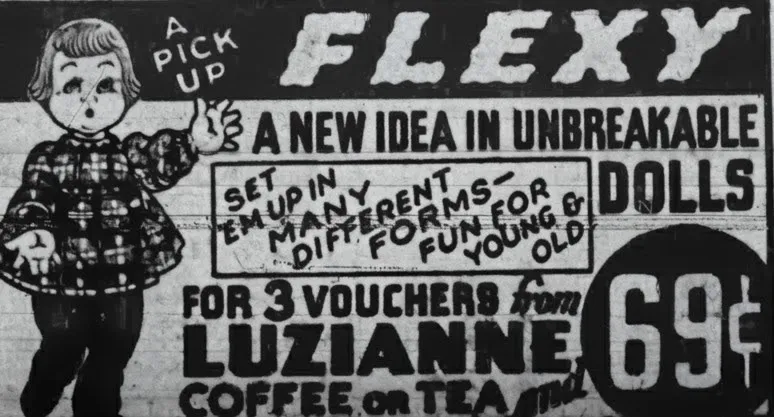
Luzianne Tea giveaway. Times-Picayune. December 1939